Bad Bunny's Super Bowl Performance Bridges Culture, Politics
Bad Bunny’s Super Bowl Performance Bridges Culture And Politics
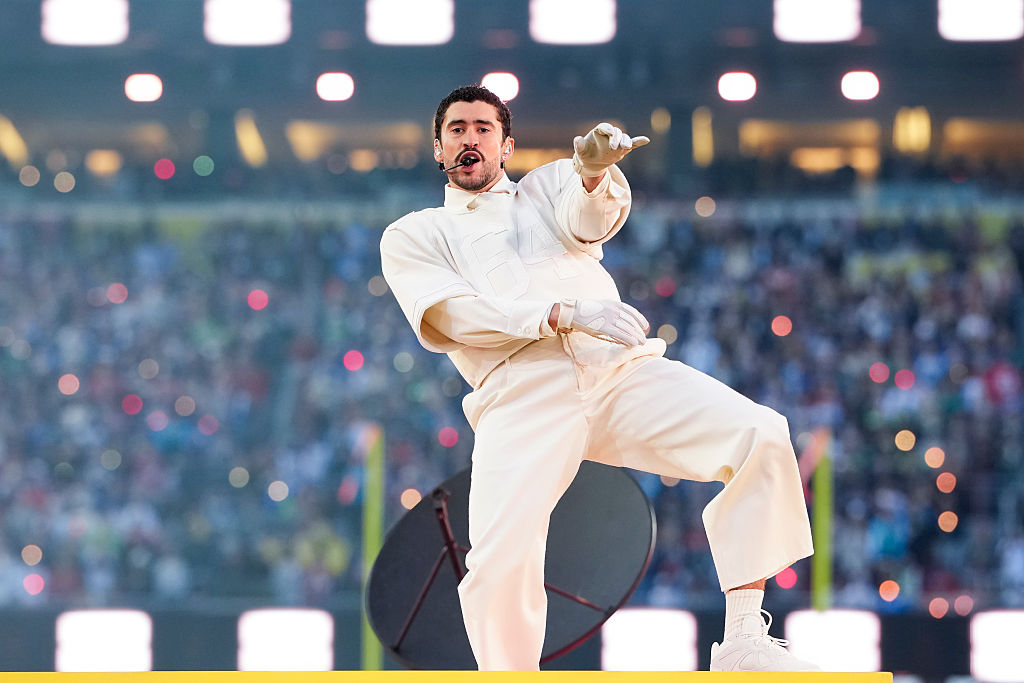
The joyful audacity of Bad Bunny’s halftime performance put the colonizer class on notice and offered a roadmap for resistance through storytelling, shared experience, and self-determination. From the opening sequence with laborers on a sugar cane plantation to the flag presentation at the end, Benito Bowl was a cultural celebration grounded in shared experience and history.
Like many, I tuned in simply to watch the genius unfold. And it was a masterful display wrapped in a simple 13-minute production that united the American diaspora like no other.

The performance reflected our shared ancestral connection carried through the beat of drums and collective resistance to European exploitation. It’s a shared connection Benito carries through his music, honoring the flags of the many nation-states that make up the Americas.
Bad Bunny’s performance was a brilliant recognition of not just Latino cultures, but the entirety of the Americas, including predominantly Black nations in the Caribbean. The final roll call and flag display had the energy of a mini-Carnival, with deep roots in celebrating freedom and colonial resistance.
I couldn’t help but feel a little excitement when I spotted the Bajan flag in the final number. My paternal great-grandparents came to the U.S. in the late 1890s and early 1900s from Barbados and Cape Verde. They raised their children in a community alongside Black Americans and Puerto Ricans, settling in parts of Brooklyn, N.Y.
Benito didn’t pander with generic statements like “we’re all immigrants,” opting instead to represent the fullness of the nations and cultures that make up the United States and the Americas. At a time of historic erasure, it gave us what we needed most—community care, family togetherness, and self-determination.
Even saying his full name and talking about the dreams and drive that got him to where he is today were relatable.
No, most of us aren’t on the verge of being the highest-streamed artist in the world. But many of us have been taught to shrink ourselves to appease Eurocentric standards and the white gaze.
I’m not a Bad Bunny superfan. But I listen when my peers and the young people in my life direct my attention to things worth engaging. And I spent a little time scrolling through the Bad Bunny syllabus curated by Professors Petra Rivera-Rideau and Vanessa Diaz.
After taking time to engage and learn more about his latest project and work, I was impressed by the way he spoke about and cared for Puerto Rico. While he’s not the first Puerto Rican artist to put the island on the international radar, he refused to compromise.
His performance also reminded me of the deep connection I felt as a child dancing during The Caribbean Culture Center’s “Dance of the White Dress.” The invocation of Puerto Rican Independence made me think of trips with my stepfather to the Puerto Rican Cultural Center in Chicago. A former Black Panther, my stepfather taught us about the interconnection between our fight as Black people in America and the broader colonial context, like in the case of Puerto Rico.
And it also reminded me of my week traveling through Puerto Rico almost 10 years ago. In December 2017, mere months after Hurricanes Irma and Maria ravaged the island, I traveled with a mutual aid group. We spent the entire trip outside of San Juan in communities like Vieques, Humacao, and Loíza.
I didn’t understand many of the words said to me without a colleague translating, but I understood the feeling of community. And by the time we got to Loíza, I was home.
In Loíza, I sat with the artist Samuel Lind, who shared the story behind his painting Black Justice. It told the story of Adolfino Villanueva Osorio, a Black woman who was murdered by the police while standing her ground in defense of her family and land.
The determination, resilience, and preservation of community and culture were deeply intertwined in efforts to rebuild and reclaim, even as most of the island sat in darkness. It was an experience very reminiscent of the exploitation, systemic disinvestment, and displacement of Black communities on the mainland.
For others, like my 22-year-old son, Benito Bowl made them pause and ask questions. The powerful imagery of a power outage and workers working tirelessly to patch up the aging power grid. Another shared experience we understand is power outages and soaring energy prices.
And then there was the flag Benito holds near the end of his performance, a symbol aligned with Puerto Rican Independence. It’s a flag and heritage once banned.
Want to fly a rebel flag and show your independence? There’s plenty from the American diaspora to choose from that aren’t the stars and bars. I strongly considered flying a Bajan flag after Barbados gave the British crown the finger in 2021, breaking the final ties with its former colonizer.
While some also criticize his performance and question whether the NFL Super Bowl can be a vehicle for liberation, an artist still chose what to do with his platform. It’s true, the NFL is a corporate formation with no genuine interest in our unity or liberation.
But the moment is a gift for those who choose to take it. Art helps us process and find meaning. Like Kendrick Lamar’s performance last year, Benito’s halftime show offers an opportunity to engage with the culture and expand our understanding of commonality.
People are engaging with the concept of Puerto Rican independence, something that previously wouldn’t have been part of mainstream conversations, often stopping at calls for statehood.
Throughout the performance, Benito made clear choices that evoke a particular feeling and imagery for the millions watching at a time when hope and inspiration can be hard to find.
And of course, there is always room for criticism and critique. But sometimes we get so lost in all the ways something fails to meet a particular standard or viewpoint, that we fail to see the opportunities to bridge culture and a politic we want others to embrace.
Time for more people to focus on bridging cultural gaps and less chatising folks for not being as woke as us. Be better and find a way to help people understand the necessary shifts in perspective so that we can change not just discourse but conditions.
SEE ALSO:
FAMU Responds: Student Told Not To Use ‘Black’ On BHM Flyers
Celebrate Black History Month Like It’s Going Out Of Style
Bad Bunny’s Super Bowl Performance Bridges Culture And Politics was originally published on newsone.com

![2025 app promo graphics [102.5]](https://praisecharlotte.com/wp-content/uploads/sites/42/2025/12/17653931331074.jpg?quality=80&strip=all&w=150&crop=0,0,100,150px)

